
Best Time to Visit Arenal, Costa Rica:
Weather, Crowds, and Prices
By Month
There isn’t really a single “best” month to visit Arenal, it depends on what you’re optimizing for: sunshine, savings, or fewer people on the trail. Here’s an honest breakdown of what each part of the year actually looks like on the ground, month by month, so the decision is based on how you actually want to spend your days rather than a generic “go in the dry season” answer.

Dry season: December to April
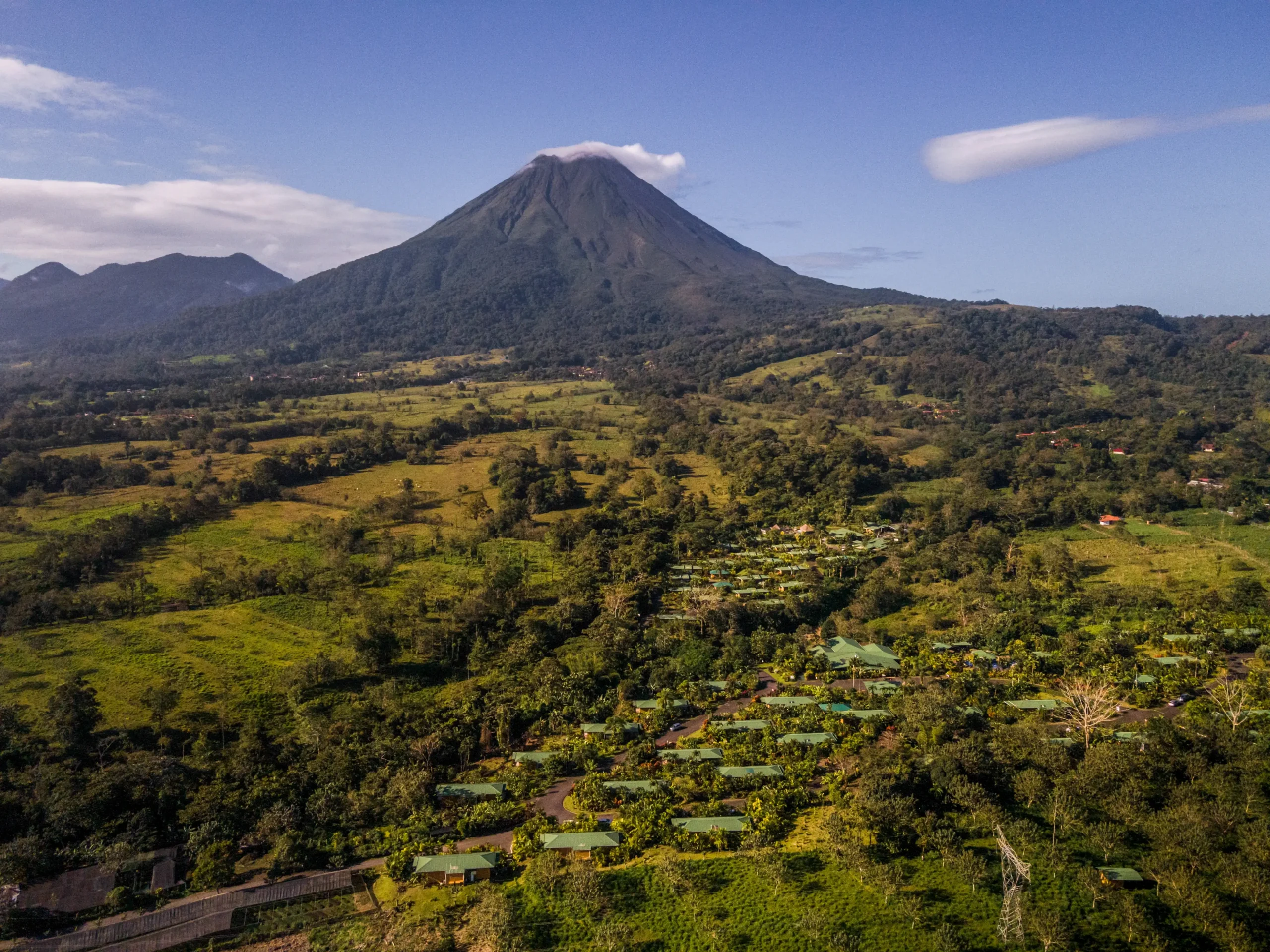
This is Arenal’s most stable stretch of weather. Days tend to be sunny or partly cloudy with less rainfall, which also means better odds of seeing the volcano’s cone without a cap of cloud on top of it, though even in dry season, that view is never fully guaranteed on any single day. Humidity drops slightly too, which makes hiking and outdoor tours noticeably more comfortable. It’s also the busiest and priciest window, especially around Christmas, New Year, and Easter week (Semana Santa), when Costa Ricans themselves travel in large numbers and hotel rates climb across the region. If a trip falls in this window, booking accommodations and popular tours like Río Celeste or canyoning several weeks ahead is worth the effort.
Green season: May to November
Arenal doesn’t follow the same rainfall pattern as the rest of the country. Because of where it sits in the northern lowlands, it stays wetter than most regions year-round, with the heaviest rain typically landing between June and October. A typical green season day usually starts sunny or partly cloudy, which is the best window for hikes and outdoor tours, with rain arriving in the afternoon or evening, often in defined bursts rather than an all-day downpour. September and October tend to be the rainiest months, but they’re also when prices drop the most and crowds thin out the most, making them a genuinely good value window rather than something to avoid outright.
A quick cheat sheet
- December–April: sunniest, busiest, most expensive, best trail conditions
- May–August: a mix of sun and rain, moderate prices, decent crowds, good for a first-time balance of value and weather
- September–October: wettest, cheapest, quietest, best for budget-conscious travelers who don’t mind an afternoon shower
- November: transitioning back toward dry season, often good value with improving weather
What time of day matters more than time of year
Regardless of season, mornings consistently offer the clearest skies and best odds of an unobstructed volcano view, since cloud tends to build through the afternoon as the day heats up. That’s true in January just as much as in September. Scheduling hikes, photography, and outdoor tours for the morning and treating afternoons as more flexible is a smarter strategy than chasing a specific month for clear views.
The shoulder season sweet spot
May and late November often get overlooked, sitting right at the edges of dry and green season. They tend to offer a decent mix of both worlds: prices and crowds closer to green season levels, but with more stretches of clear weather than the peak rainy months. For travelers who can’t commit fully to either season, these transition weeks are worth a closer look.
Temperatures stay fairly consistent
Unlike the rainfall pattern, temperatures in La Fortuna and around Arenal don’t swing dramatically by season. Daytime highs generally sit in the mid-70s to low-80s Fahrenheit (around 24 to 28°C) year-round, with cooler evenings, especially closer to the lake or higher elevations. That means packing for heat and humidity matters more than packing for cold in any month, though a light layer for evenings is never a bad idea.
Crowds and pricing beyond the big picture
Outside of the major holiday weeks, weekday visits tend to be quieter than weekends even during peak season, since Costa Rican domestic travelers often visit on weekends. If flexibility allows, arriving mid-week and visiting popular spots like La Fortuna Waterfall or the volcano park’s main trails early in the day, before tour buses arrive, makes a noticeable difference in how uncrowded the experience feels, in any month.
What matters more than the calendar
Arenal’s summit is often wrapped in cloud regardless of the season, so a clear view is common but never something to plan a whole trip around. And rain doesn’t cancel a trip here the way it might elsewhere. A warm soak feels just as good, arguably better, under grey skies as it does under sun, so whatever month you land in, the hot springs are always part of the plan.
The bottom line
If sunshine and predictable weather are the priority, aim for the dry season and book early. If a lighter crowd, greener scenery, and better prices matter more, the green season, especially September and October, is worth a serious look. Either way, Arenal’s hot springs, waterfalls, and volcano views hold up across the calendar, so there’s genuinely no wrong time, just a different version of the same trip.
Whatever the month, Arenal Manoa‘s natural hot springs stay open and just as warm, rain or shine.

FREQUENTLY ASKED QUESTIONS
What is the rainiest month in Arenal?
September and October tend to bring the heaviest rainfall, though even then it’s rarely a full day of steady rain.
Can I see the volcano's cone clearly at any time of year?
Clear views are possible in any month, and mornings offer the best odds regardless of season, since cloud cover tends to build up in the afternoon.
Is the dry season worth the higher prices?
It’s the best bet for consistent sunshine and easier trail conditions, so it’s worth it if that’s the priority, just book accommodations and tours well ahead.
