
Public vs. Private Hot Springs in La Fortuna:
which one will you choose?
Why La Fortuna is built around hot water?
La Fortuna sits at the base of Arenal Volcano, and the same volcanic activity that shaped the landscape also heats the groundwater that flows through the area. Rainwater seeps down through porous volcanic rock, picks up heat from magma chambers deep underground, and resurfaces through rivers and springs at temperatures that can reach well into the 100s Fahrenheit before being tempered by cooler surface water. That geology is the reason an entire local economy, from small riverside pools to full hotel complexes, has grown up around something as simple as warm water coming out of the ground.
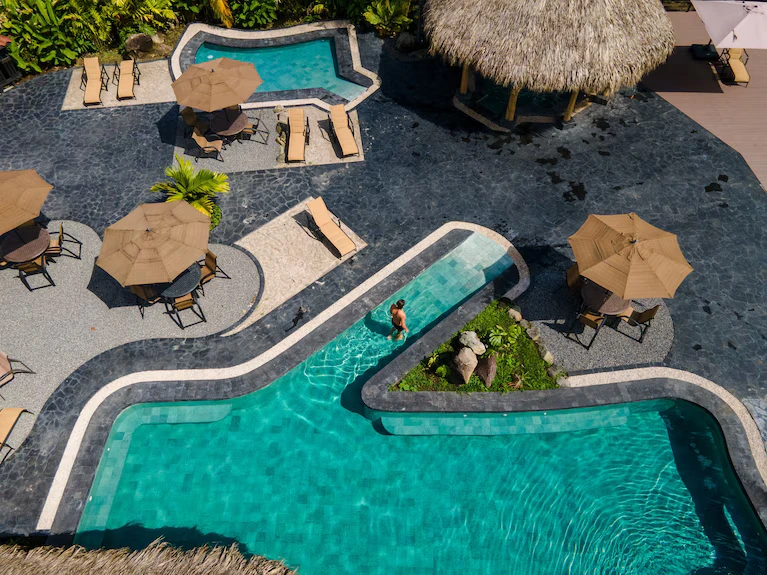
If you’re staying at Arenal Manoa, you already have access to the hotel’s own natural hot springs on site, fed by the same volcanic source as the rest of the valley. But plenty of guests like to explore beyond the property too, and that’s where the public versus private question comes in, since the two experiences differ more than most first-time visitors expect.
Public hot springs: free, natural, and a little rougher around the edges
The best known public spot is along the Río Tabacón, where warm water flows over rocks in a forested stretch of river that’s open to anyone, free of charge, at any hour. There’s no entry fee, no reservation, and no set hours, which makes it appealing if you want a quick, low-cost dip or you’re simply curious about the phenomenon before committing to a hotel visit.
The trade-off is that it’s exactly what it sounds like: a natural riverbank, not a hotel. There are no changing rooms, no towel service, and no staff keeping an eye on water temperature or safety, which means currents, slippery rocks, and water quality are all variables you manage yourself. Parking is informal and can fill up fast in high season, roughly December through April, and the pools themselves vary in temperature depending on how recently it’s rained, since river flow dilutes the thermal water. On a day after heavy rain, what’s normally a warm pool can feel barely lukewarm.
Private hot springs: comfort, consistency, and a price tag
Private hot springs, whether at a dedicated hot springs park or as part of a hotel stay like Arenal Manoa, give you engineered pools with controlled temperatures, proper decks, lighting, and usually food and drink service nearby. You’re not sharing the experience with whoever happens to show up that day, and the water quality is monitored rather than left to the river, which matters if you’re traveling with kids or simply want a predictable experience after a long travel day.
At Arenal Manoa, the hot springs are part of the stay rather than a separate paid attraction, so there’s no extra ticket to buy, no shuttle to arrange, and no schedule to plan around. That matters if you’d rather soak at 9 p.m. after dinner than drive out to a public spot in the dark on unfamiliar roads. Standalone hot springs parks elsewhere in the valley, by contrast, typically charge a day-pass fee and operate on fixed hours, which is worth knowing if you’re comparing a hotel stay against an independent day trip.
A quick cost and convenience comparison
Thinking in terms of total time and money helps clarify the choice. A public river visit costs nothing but requires transport, parking, and a tolerance for unpredictable conditions. A standalone hot springs park usually charges a day-pass fee, often in the range of a dinner out, but adds amenities like swim-up bars, water slides for kids, and landscaped grounds. Hot springs included in a hotel stay effectively fold that cost into your room rate and remove the travel time entirely, since the pools are steps from your door rather than a drive away.
So which one should you actually pick
If you’re curious and want a free, local experience with zero planning, the public river pools are worth a short visit, ideally earlier in the day when they’re calmer and before afternoon rain showers, which are common even in dry season, raise the river level. If you want a relaxing, predictable soak without worrying about overcrowding or water quality, the private option, including the springs already included in your stay, is the better call for most of your trip.
A lot of guests end up doing both: one afternoon exploring the public river out of curiosity, and the rest of their evenings in the hotel’s own pools, which require no transport and are available whenever you want them, whether that’s right after breakfast or last thing before bed.
Public hot springs are a fun, free detour if you’re curious about La Fortuna’s volcanic water on your own terms, but private pools, especially the ones already waiting for you back at Arenal Manoa, are the more relaxing default for most of your trip.
FREQUENTLY ASKED QUESTIONS
Are the public hot springs in La Fortuna safe?
They’re generally fine for a short visit, but conditions aren’t monitored the way a managed pool is. Water levels and temperature shift with rainfall, there’s no lifeguard, and rocks underfoot can be slippery, so use normal river caution, especially with kids or after dark.
Are the hot springs at Arenal Manoa included in my stay?
Yes, the hotel’s natural hot springs are part of your stay, so you can use them as often as you like, at any hour the pools are open, without booking a separate ticket or paying an entry fee.
Is it worth paying for a standalone hot springs park if my hotel already has springs?
Usually not necessary. If your hotel’s springs are part of the same volcanic water source, as they are at Arenal Manoa, you’re getting the same mineral-rich water without the extra admission cost or the drive.
