
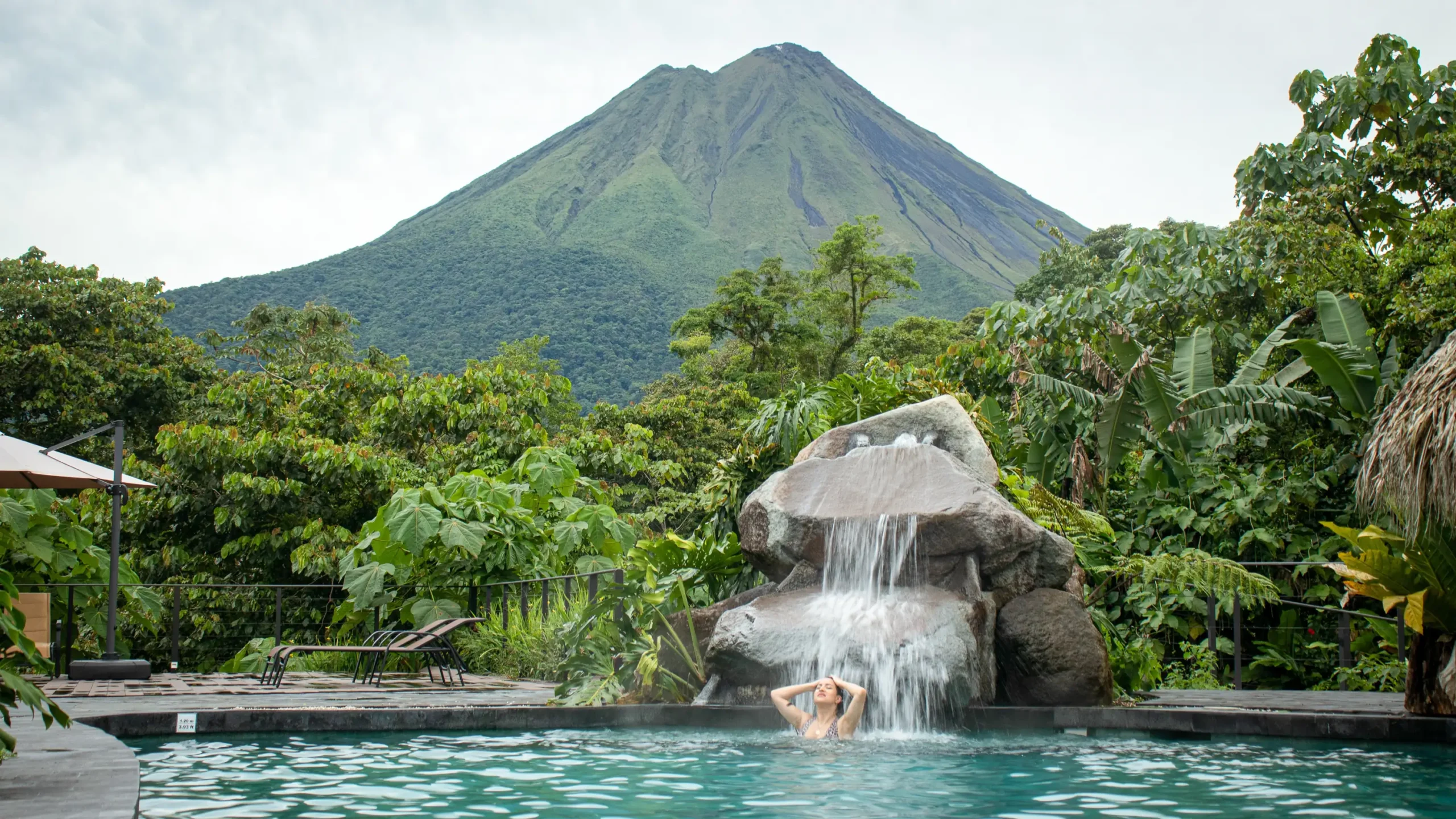
The Health Benefits of Volcanic Hot Springs
Explained
A soak in a hot spring feels good almost immediately, but it’s worth understanding what’s actually going on beneath that relaxed feeling, both because it makes the experience more interesting and because it helps set realistic expectations about what a soak can and can’t do.
Warmth and circulation
Heat causes blood vessels near the skin’s surface to widen, which increases blood flow to muscles and joints. Many people find this eases tension after a long hike, a day of ziplining, or simply hours of travel. It’s a big part of why hot springs have been used for recovery and relaxation across cultures for centuries, long before anyone understood the underlying physiology.
What’s in the water
Volcanic hot springs typically carry dissolved minerals, commonly calcium, magnesium, potassium, and sometimes sulfur, picked up as the water travels through volcanic rock underground. Some research suggests the skin can absorb small amounts of these minerals, and soakers often report smoother-feeling skin afterward. That said, the science here is still developing, and results vary depending on the specific mineral makeup of each spring, so it’s fair to treat this as a pleasant bonus rather than the main event.
Stress and sleep
Warm water combined with quiet, natural surroundings tends to lower physical tension, and a lot of people notice they sleep better after an evening soak, particularly after an active day outdoors. Part of this is physiological, the drop in body temperature after leaving warm water mimics the natural temperature dip that helps trigger sleep, and part of it is simply the effect of slowing down after a full day of activity.
Contrast bathing: hot and cool in sequence
Some resorts, Arenal Manoa included, offer a mix of warmer and cooler pools in the same area. Moving between temperatures, a few minutes in the hottest pool followed by a shorter stretch in a cooler one, is a practice some people use to further encourage circulation. It’s not necessary to enjoy the benefits of a
Free public springs vs. resort pools
Around La Fortuna, it’s possible to soak in free public spots along rivers warmed by the same underground heat, without the facilities, safety monitoring, or temperature control of a resort setting. Resort pools, by contrast, filter and regulate the water to a consistent, comfortable temperature, add amenities like loungers, swim-up service, and changing rooms, and generally offer a more predictable, relaxed experience. Both draw on genuinely geothermal water, the difference is mostly about comfort, safety, and consistency rather than the water itself.
A simple etiquette note
Showering before entering a shared pool, keeping voices low in quieter sections, and giving other soakers some space are small courtesies that make the experience better for everyone, especially in the more tranquil, adults-oriented pools that many resorts set aside separately from the livelier family areas.
A long tradition, not a modern trend
People living around La Fortuna were using its warm rivers and springs long before any resort existed, drawn by the same heat and mineral content visitors soak in today. That long, practical history, using naturally heated water for comfort and recovery, is part of what makes the experience feel different from a standard heated hotel pool, even before considering the specific minerals involved.
Building it into an evening routine
A soak roughly an hour or two before bed tends to work best for the sleep benefit, giving the body’s temperature enough time to drop back down afterward, which is the actual trigger for feeling sleepy. Pairing it with dimmer lighting, less screen time, and a short walk back to the room afterward tends to carry the relaxed feeling further into the evening rather than losing it the moment you towel off.
A few things worth knowing
Hot springs are a genuinely pleasant part of a wellness routine, but they’re not a medical treatment. Anyone with a heart condition, blood pressure issues, or who is pregnant should check with a doctor before extended time in hot water. It’s also worth staying hydrated, easing in gradually on a first visit, and alternating with cooler water if that’s available. Avoiding alcohol immediately before or during a long soak is a good practice too, since heat and dehydration compound each other.
Why the source matters
Springs fed directly by geothermal activity, like the ones running through Arenal Manoa Hot Springs & Spa, tend to have a naturally consistent temperature and mineral content, which is part of what sets a true volcanic hot spring apart from a simply heated pool. That consistency is also why the same springs have been used by people in this region for generations, long before hotels and resorts existed around them.
The bottom line
A soak won’t fix everything, but the combination of heat, minerals, and simply slowing down for an hour is a genuinely good reset, especially after a day of hiking or travel. Treat it as one good habit among many, not a cure-all, and it earns its place in a wellness routine.
FREQUENTLY ASKED QUESTIONS
Are hot springs good for sore muscles?
Many people find the combination of warmth and improved circulation helps ease tension after physical activity. It’s a helpful complement to recovery, not a substitute for medical treatment.
Can pregnant women or people with heart conditions soak in hot springs?
It’s best to check with a doctor first, since extended time in hot water affects blood pressure and circulation. Most of the time, hot springs are not recemmened for pegnant women.
How long should I stay in a hot spring?
Starting with 10 to 15 minutes is a reasonable approach, especially on a first visit, staying hydrated and easing in gradually rather than jumping into the hottest pool right away.
