
Arenal Volcano: Is It Still Active?Everything Visitors Ask
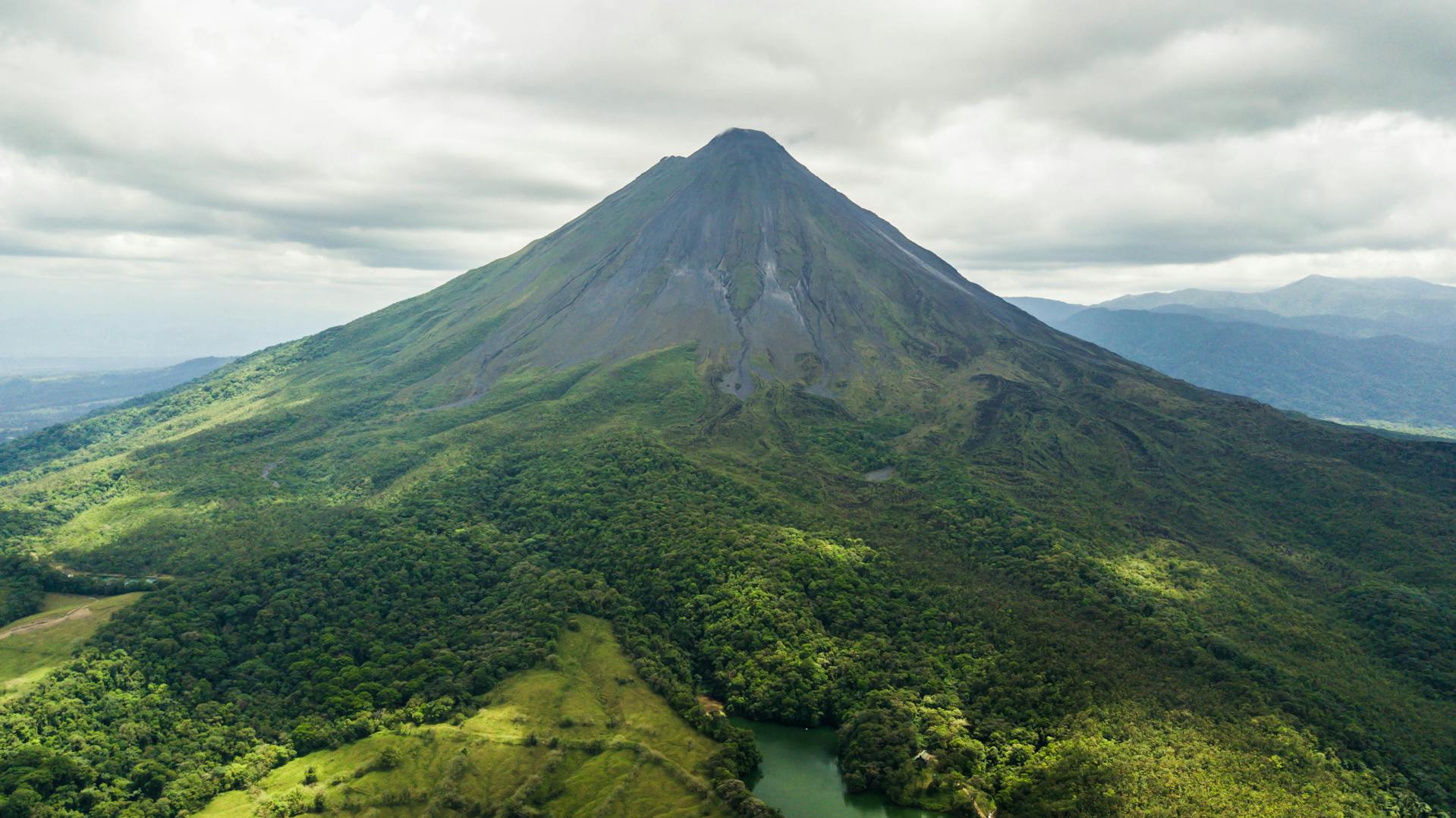
Standing in La Fortuna looking up at that near-perfect cone, it’s a fair question: is Arenal actually still active, or is it basically extinct at this point? The short version is that it’s very much still an active volcano, it’s simply not erupting right now, and understanding that distinction changes how the whole visit makes sense.
Short answer: yes, but it’s resting
Arenal is still classified as an active volcano, but it’s currently in what volcanologists call a resting phase. Its last period of continuous eruptive activity ran from 1968 to 2010, forty-two years of ongoing activity that shaped the lava fields visitors walk through today. Since late 2010, it’s been quiet, the longest calm stretch since it first erupted. Costa Rica’s national observatory, OVSICORI-UNA, monitors it around the clock, tracking seismic activity, gas emissions, and ground movement. As of the most recent reports, the alert level has stayed at “Level 1: Calm,” the lowest tier on their 0-4 scale.
What “resting” actually looks like
In practice, that means occasional gas emissions and very minor activity caused by groundwater interacting with residual heat underground, not fresh magma reaching the surface. There are no lava flows, no ashfall, and no evacuations. Small, low-level earthquakes are detected regularly, but they’re considered normal background seismicity for a volcano in this state, and none of it is felt by visitors going about a normal day in La Fortuna.
The 1968 eruption that changed everything
Before 1968, Arenal wasn’t even considered a notable mountain, locals referred to it simply as a steep, forested hill. On the morning of July 29, 1968, it erupted with almost no warning, opening three new craters on its western flank and sending pyroclastic flows toward the nearby communities of Tabacón, Pueblo Nuevo, and San Luis. The eruption destroyed all three villages and killed dozens of people, with historical accounts placing the toll between roughly 78 and 87 depending on the source and how later related incidents are counted. It remains one of the more sobering chapters in the region’s history, and it’s part of why Arenal is treated with genuine respect rather than just admired for its shape.
Four decades of continuous activity
What followed was remarkable: Arenal stayed almost continuously active for the next 42 years, with regular explosions, glowing lava visible at night, and occasional pyroclastic flows. A notable moment came in 1998, when a strong eruption sent lava and ash close enough to the Tabacón area that roughly 450 people were evacuated as a precaution. That long, visible activity is exactly what turned Arenal into one of Central America’s most recognizable volcanoes and built the region’s tourism industry around it.
Could it erupt again?
Possibly, yes. Volcanologists can’t predict the timing of a return to activity, which is exactly why the monitoring never stops. Park authorities close specific trails or sectors whenever readings suggest elevated risk, and guides are trained to know current conditions before leading any hike. Climbing to the summit itself is not permitted at any time, resting phase or not, both because it’s illegal within the park and because loose volcanic rock and unpredictable terrain make it genuinely hazardous.
The hot springs connection
The same magma chamber that powered four decades of eruptions still radiates heat far below the surface, and that heat is what warms the groundwater feeding hot springs throughout the region, including the ones flowing through Arenal Manoa. It’s a neat bit of symmetry: the very thing that once made this a place of real danger is the same thing that now makes it a place people travel specifically to relax in.
How Arenal compares to Costa Rica’s other volcanoes
Costa Rica has several active volcanoes, including Poás and Irazú in the Central Valley and Rincón de la Vieja in Guanacaste, and each is monitored the same way by OVSICORI-UNA. Poás, for example, has had more recent visible activity, including periodic ash and gas emissions that have closed its park temporarily in past years. Arenal’s current resting phase actually makes it one of the calmer of the country’s monitored volcanoes at the moment, which is part of why its trails stay reliably open.
Why visitors still come
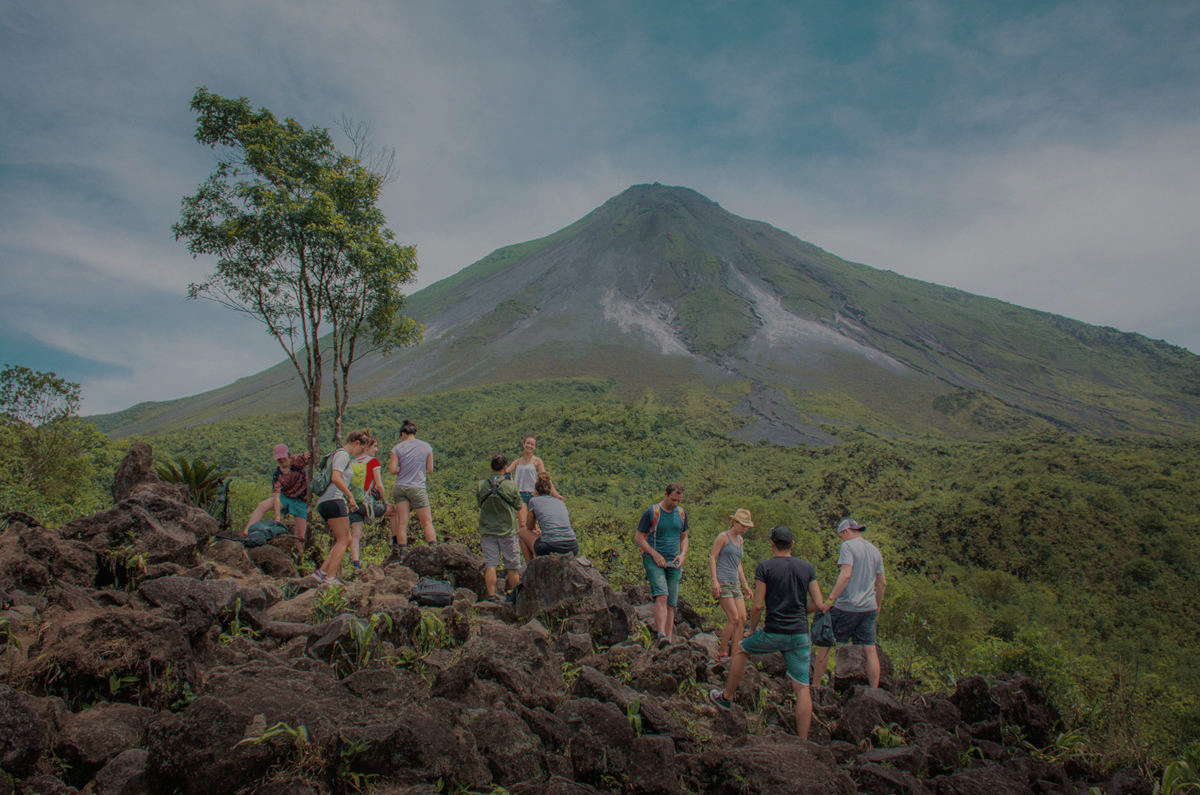
Between the lava field trails, like Las Coladas and El Ceibo, the lookout points across both the Volcano Sector and the newer Peninsula Sector on Lake Arenal, and the wildlife along the way, there’s plenty to see even with the volcano quiet. And the same underground volcanic heat that built the mountain is what feeds the hot springs scattered around its base, including the ones at Arenal Manoa.
The bottom line
Arenal’s quiet cone isn’t a sign that anything has gone dormant for good, it’s a volcano being closely watched, not a volcano that’s stopped being one. That combination of a resting phase and constant monitoring is exactly what makes it possible to hike its trails, soak in its springs, and still feel the presence of something genuinely alive underfoot.

FREQUENTLY ASKED QUESTIONS
When did Arenal last erupt?
Its last significant eruptive activity was in 2010, closing out forty-two years of continuous activity that began in 1968.
Could Arenal erupt again someday?
It’s possible, and volcanologists can’t predict exactly when. That uncertainty is exactly why monitoring continues around the clock.
Can visitors hike to the summit?
No. Climbing to the top is not permitted at any time, both for legal and safety reasons, including unstable volcanic terrain.
